
Dried Vegetables: A Practical Guide to Choosing and Cooking Them
Dried vegetables are vegetables from which much of the water has been removed. They can be useful when you want a compact pantry ingredient for a cooked meal. The most important choice is not simply which vegetable to buy, but which form suits your recipe: recognisable pieces, flakes or a fine powder.
In a Rajasthan pantry, pair these ingredients with dal, millet, roti and seasonal vegetables, and rotate older packs first.
In this guide
- Choose the form before choosing the recipe
- Read more than the product name
- Build a small, useful pantry
- Use the label as the preparation reference
- Questions before you buy
This MyMarwar guide brings those choices together. Use it as a starting point, then follow the preparation instructions on your actual pack. A dried vegetable intended for cooking should not automatically be treated as a ready-to-eat snack.
Choose the form before choosing the recipe
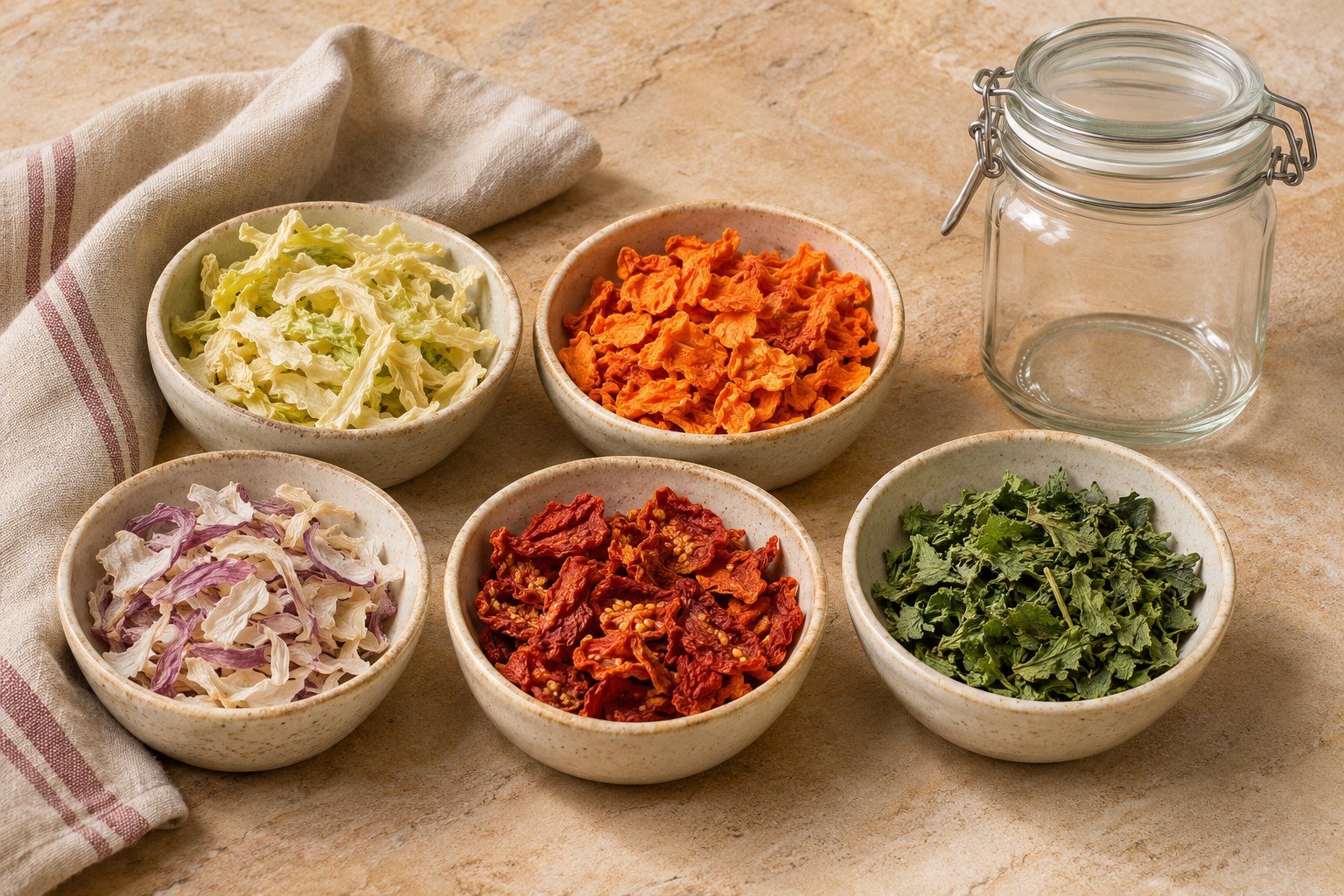
Pieces and flakes make sense when you want texture in soup, a rice dish or a filling. Powder distributes flavour and colour through a sauce, batter or seasoning. A spoon of powder cannot reproduce the volume or bite of a bowl of chopped vegetables.
For example, cabbage strips can contribute pieces to a cooked soup, whereas tomato powder contributes tomato flavour to the liquid around them. These are complementary jobs rather than interchangeable ingredients.
Read more than the product name
Look for the ingredient declaration, intended preparation, net quantity, batch details and best-before information. A mixed-vegetable packet may contain several vegetables, seasoning or other ingredients. Check the actual list instead of assuming that every item sold as a dried vegetable is a single ingredient.
When a seller offers different pack sizes, choose around the dishes you realistically cook. A smaller pack that you use comfortably can be more practical than a large pack bought only because its price per kilogram is lower.
Build a small, useful pantry
- Pick one vegetable with visible texture for cooked dishes.
- Add a savoury powder if you regularly make soups or gravies.
- Keep ingredients in packaging that closes securely.
- Note the opening date and the recipe in which you first used each product.
That first cooking note is valuable: record how much liquid you added, whether you soaked the pieces and what the finished texture was like. Your next meal will be easier to adjust.
Use the label as the preparation reference
Different cuts and drying methods behave differently. Rehydrate when instructed, allow pieces to cook adequately and taste the completed dish rather than relying on a universal soaking time. For storage, use the directions printed on the product; a general blog cannot assign one shelf life to every dried ingredient.
Questions before you buy
Are dried vegetables the same as vegetable powders?
Powder is one possible form. Whole pieces, strips and flakes are also sold, with different roles in cooking.
Does MyMarwar sell every example mentioned in this guide?
Examples explain the category. Check the current pantry collection for the products and pack options actually offered.
Explore the MyMarwar pantry
Check MyMarwar pantry collection for current product information and available options. Read the actual label before preparation, and ask the MyMarwar team if an essential detail is missing.
Explore 30 individual dried-ingredient guides
Choose the ingredient you cook with. These guides cover distinct vegetables and regional culinary ingredients, including mushrooms, leaves, pods and berries used in savoury dishes. A guide’s inclusion does not itself confirm current stock; check the linked product or collection.
Aromatics, peppers and mushrooms
- Dried Onion Flakes: Rehydrating, Browning and Everyday Indian Uses
- Dried Garlic Flakes: How to Cook Them Without Scorching
- Dried Mushrooms: Choosing the Variety and Building a Cooked Gravy
- Dried Capsicum Flakes: Flavour and Colour for Sauces and Fillings
- Dried Green Chilli: Control the Heat in Cooked Chutney and Curry
- Dried Tomato Pieces: Rehydration, Sauce Texture and Powder Differences
Root vegetables
- Dehydrated Carrot Flakes: Soup, Pulao and Filling Ideas
- Dehydrated Potato Cubes: Plan the Centre Texture Before the Gravy
- Dried Sweet Potato: Choose Powder or Pieces for the Right Recipe
- Dehydrated Beetroot Flakes: Cooked Texture, Colour and Recipe Uses
- Dried Radish: Mooli Strips for Soup and Cooked Vegetable Dishes
Leafy vegetables and cabbage-family ingredients
- Dried Cabbage: Using Shreds in Soup, Noodles and Cooked Fillings
- Dehydrated Cauliflower: Floret Size, Rehydration and Curry Texture
- Dehydrated Broccoli: Florets, Stem Pieces and Cooked Meal Ideas
- Dried Spinach Leaves: Flakes for Dal, Soup and Savoury Fillings
- Dried Fenugreek Leaves: Kasuri Methi Aroma Without Overdoing It
Squash, gourds and brinjal
- Dried Pumpkin: How Pieces and Powder Change a Soup or Gravy
- Dehydrated Cucumber Powder: Understand Its Cooking Role Before Buying
- Dried Bottle Gourd: Lauki Pieces for Dal, Gravy and Cooked Sabzi
- Dried Bitter Gourd: Karela Slices and a Balanced Savoury Dish
- Dried Tinda: Rehydrating Apple Gourd for a Cooked Gravy
- Dried Brinjal: Baingan Slices for a Moist Cooked Curry
- Dried Ridge Gourd: Turai Slices and a Moisture-Controlled Sabzi
Peas, pods and Rajasthani pantry ingredients
- Dehydrated Green Peas: How They Differ from Dried Matar Pulses
- Dried French Beans: Cut Size and Preparation for Soup or Sabzi
- Dried Drumstick Pods: Preparation for Sambar and Cooked Curries
- Dried Sangri: A Practical Guide to Rajasthani Pod-Based Sabzi
- Dried Ker: Prepare the Berries Before Building Ker-Sangri Flavour
- Dried Kachri: Pieces, Powder and Sourness in Rajasthani Cooking
- Dried Kumatiya: Identify the Form Before Planning a Rajasthani Sabzi
30 more dried-vegetable guides
Expand your ingredient knowledge with these additional vegetables and unripe fruits used in savoury cooking. Each guide explains product form, cooked uses and preparation questions. Check the current collection or contact MyMarwar for availability of a particular ingredient.
Roots, tubers and stems
- Dried Turnip: Shalgam Pieces for Stews, Soup and Curry
- Dehydrated Parsnip: A Root Vegetable for Soup and Savoury Mash
- Dried Asparagus: Treat Tips and Stem Sections as Different Pieces
- Dried Kohlrabi: Knol Khol Sticks for a Cooked Vegetable Dish
- Dried Rutabaga: Swede Pieces for Hearty Cooked Meals
- Dried Taro Root: Arbi Pieces Need Clear Food-Use Instructions
- Dried Elephant Foot Yam: Suran Pieces for Thoroughly Cooked Dishes
- Dried Lotus Root: Kamal Kakdi Slices for a Cooked Gravy
Aromatic vegetables
- Dried Celery Flakes: Build an Aromatic Soup Base Without Guessing
- Dried Leek: Rings for Soup, Gravy and Cooked Fillings
- Dried Fennel Bulb: Aromatic Strips for Soup and Savoury Sauces
Leafy vegetables and cabbage-family varieties
- Dried Kale Leaves: Plan Leaf and Stem Texture Separately
- Dried Swiss Chard: Leaf Flakes, Stem Pieces and Colour in Cooking
- Dried Mustard Greens: Sarson Leaves for a Cooked Saag Trial
- Dried Amaranth Leaves: Chaulai for Dal and Savoury Leafy Dishes
- Dried Bok Choy: White Ribs and Green Leaves Need a Texture Plan
- Dehydrated Brussels Sprouts: Halves, Leaves and Strong Flavour
- Dried Collard Greens: Leaf Texture for Stew, Soup and Dal
Squash and gourds
- Dried Zucchini: Slices for Stews Rather Than Fresh-Courgette Crunch
- Dried Chayote: Chow Chow Slices for Curry, Kootu and Soup
- Dried Ash Gourd: Petha Vegetable Pieces for Savoury Cooking
- Dried Snake Gourd: Chichinda Pieces for Dal and Cooked Sabzi
- Dried Pointed Gourd: Parwal Slices for Curry and Cooked Sabzi
- Dried Ivy Gourd: Tindora Coins for a Controlled Sabzi Finish
Corn, beans and unripe culinary fruits
- Dried Sweet Corn: Kernels for Soup, Pulao and Savoury Fillings
- Dried Cluster Beans: Gawar for Rajasthani Sabzi and Gravy
- Dried Green Banana: Unripe Pieces and Flour Have Different Jobs
- Dried Green Jackfruit: Young Fruit Pieces for a Savoury Curry
- Dried Green Papaya: Unripe Strips for Cooked Vegetable Dishes
- Dried Yardlong Beans: Lobia Pods for Soup and Cooked Sabzi