
Dried Vegetables List: Useful Forms for an Indian Kitchen
A useful dried vegetables list should help you choose ingredients for meals, not just memorise names. Onion, tomato, cabbage, carrot and leafy ingredients behave differently after drying. Their cut and form are just as important as the vegetable they came from.
The examples below describe culinary options, not a promise that every item is currently stocked by MyMarwar. Check the collection and individual label before planning an order.
In this guide
- Vegetables for visible pieces
- Ingredients for a smoother finish
- Leafy ingredients and flavouring leaves
- Choose a first combination
- Common questions
Vegetables for visible pieces
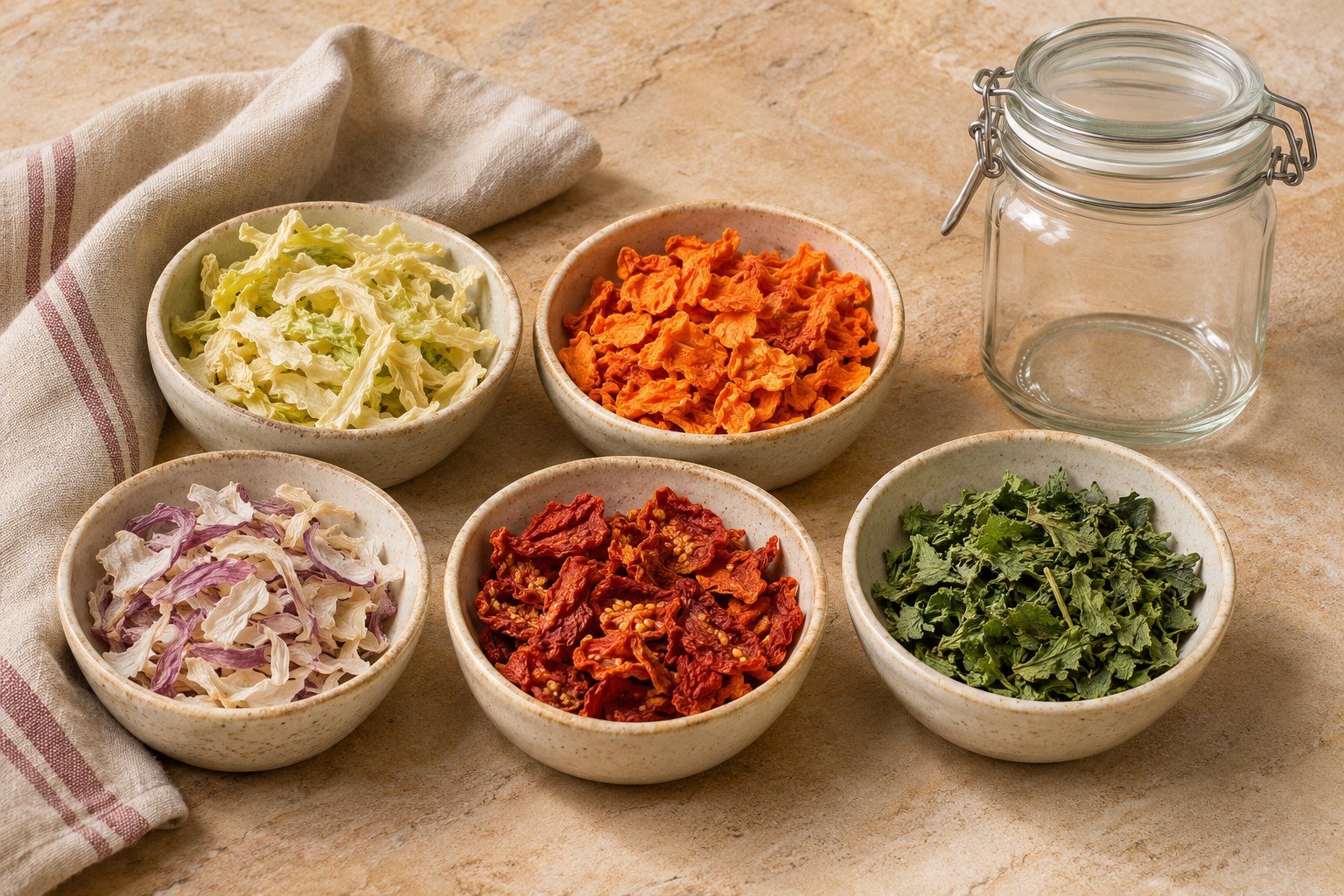
Onion flakes can provide identifiable pieces in suitable cooked dishes. Dried cabbage strips can be considered for soups and other recipes that allow them enough moisture and cooking time. Carrot pieces are another option for mixed dishes when the recipe calls for them.
Before putting different pieces in the same pan, compare their preparation instructions. A fine flake and a thick piece may not soften at the same rate. Prepare slower pieces separately when needed, rather than overcooking the rest of the meal.
Ingredients for a smoother finish
Tomato powder suits a recipe where you want tomato flavour without recognisable tomato pieces. Onion powder is useful when you want the flavour dispersed through a mix. Beetroot powder can contribute beetroot colour and taste to a suitable batter or drink.
Moringa leaf powder belongs in its own culinary group: it is a leaf ingredient with a noticeable flavour. It is not a neutral replacement for the other powders, and a recipe that tastes balanced with tomato powder will not necessarily work with the same quantity of moringa.
Leafy ingredients and flavouring leaves
Distinguish a dried leaf used for tempering from a vegetable used to add bulk. Curry leaves, for example, are normally included for their flavour in a suitable recipe. They do not replace the main vegetable component simply because both products are dried.
Keep a short shopping note with three columns: ingredient, intended dish and required preparation. This prevents a cupboard full of packets that all seemed useful but do not fit your cooking routine.
Choose a first combination
For a soup-focused kitchen, start with a vegetable piece and a compatible savoury powder. For batters, smoothies or colourful cooking, consider the particular powder the recipe requires. Add new ingredients one at a time so you can recognise their contribution.
Common questions
Is a dried vegetable mix always better than separate ingredients?
Not necessarily. A mix is convenient, while separate ingredients give you more control over proportions and cooking sequence.
Should I buy powders and flakes of the same vegetable?
Only if you use both roles. Powder changes a smooth mixture; flakes contribute pieces. Choose around recipes rather than collecting every form.
Explore the MyMarwar pantry
Check MyMarwar pantry collection for current product information and available options. Read the actual label before preparation, and ask the MyMarwar team if an essential detail is missing.