
How to Use Dehydrated Vegetables in Indian Recipes
Dehydrated vegetables work best in Indian recipes when you decide what job they need to do. Are you adding recognisable pieces, building a gravy or giving a batter a little colour? That decision helps you choose the ingredient and preparation method before the pan is on the stove.
Begin with one familiar dish rather than changing several ingredients at once. Follow the pack instructions, then compare the finished result with your usual version.
In this guide
- Use pieces in dishes that allow enough moisture
- Use powders to change the base
- Make a simple recipe-development note
- Keep fresh ingredients where they matter
- Common questions
Use pieces in dishes that allow enough moisture
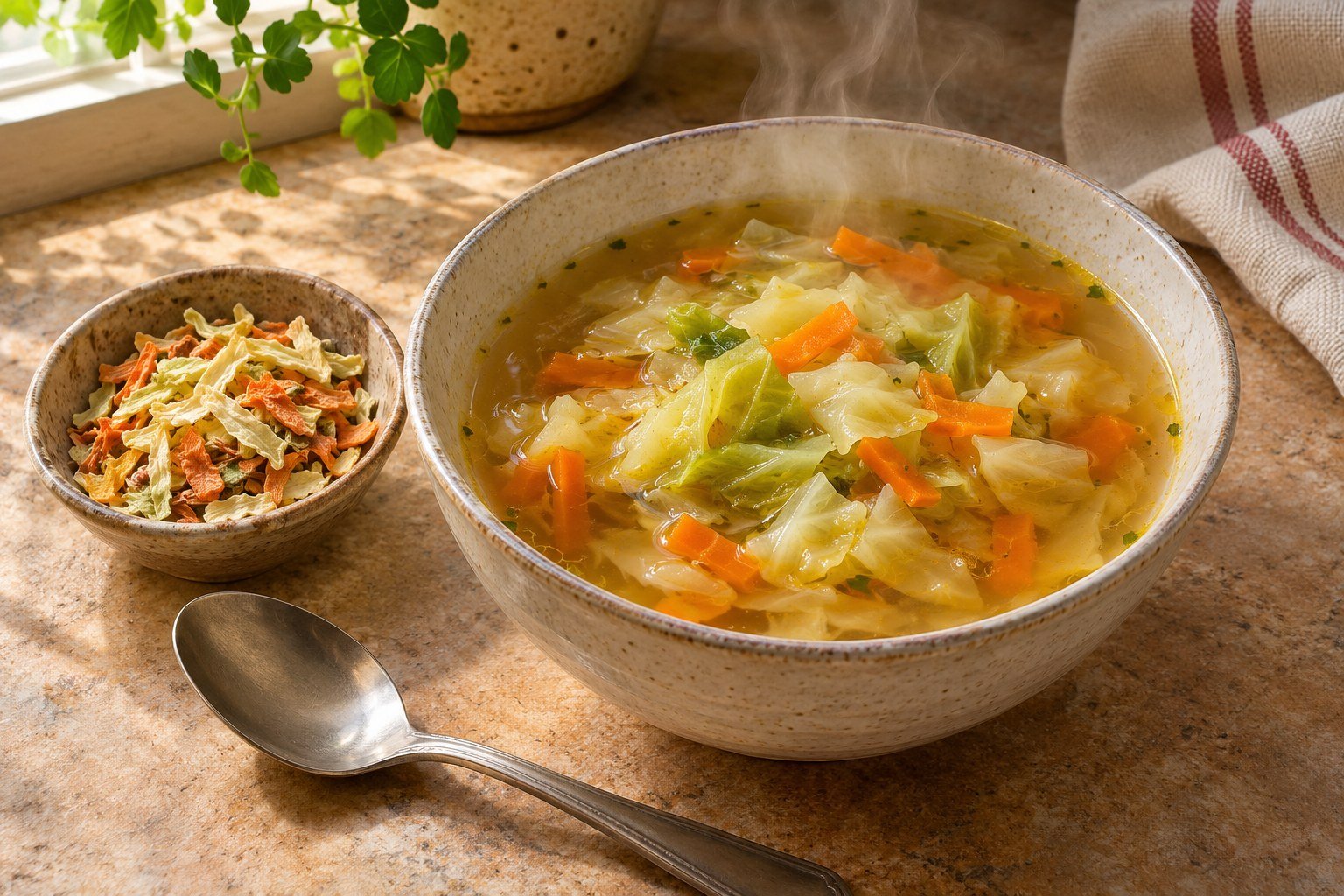
Soup and other liquid-based recipes give vegetable pieces room to soften during the appropriate cooking process. A rice dish may need the vegetable prepared separately first, depending on the cut and label directions.
For a filling, check the texture before wrapping or stuffing it. Once a filling is inside dough, it becomes harder to correct an ingredient that needed more moisture. Also manage excess liquid so that the filling does not make the dough difficult to handle.
Use powders to change the base
Tomato powder can be mixed into a little liquid before joining a soup or gravy. Onion powder can be useful in a smooth seasoning mixture. Beetroot powder can suit a batter when beetroot colour and flavour are welcome.
Each addition has its own effect. A vegetable powder is not automatically a direct gram-for-gram substitute for the corresponding fresh vegetable. Fresh produce also contributes water, texture and volume, which a dry powder does not bring in the same way.
Make a simple recipe-development note
- Write down the original dish and serving size.
- Record the exact product and amount used.
- Note whether you prepared it separately or in the main pan.
- Record changes to liquid, seasoning and texture.
- Repeat the version you like before preparing a larger batch.
This approach is especially useful for a household moving from occasional use to a regular pantry routine. It lets you discover which products save preparation work in your own cooking without making every meal taste alike.
Keep fresh ingredients where they matter
Fresh herbs, vegetables and finishing ingredients can still have a role. A dried ingredient may be convenient, but it does not need to replace everything in a dish. Build around the result you want rather than around a rule that every component must come from a dry packet.
Common questions
Which dish should I try first?
Choose a familiar cooked dish whose recipe is compatible with the product, then change just one component.
Can I add more powder to make up for missing vegetable pieces?
That changes flavour more than texture or volume. Use an ingredient form appropriate to the missing component instead.
Explore the MyMarwar pantry
Check MyMarwar pantry collection for current product information and available options. Read the actual label before preparation, and ask the MyMarwar team if an essential detail is missing.
Related MyMarwar guides
- Dried Vegetables List: Useful Forms for an Indian Kitchen
- How to Rehydrate Dried Vegetables Without Guessing the Texture
- Dehydrated Vegetables for Soup: Build Flavour and Texture Separately
- Tomato Powder Uses: Soups, Sauces, Dal and Everyday Cooking
- Dried Vegetables: A Practical Guide to Choosing and Cooking Them