
Dried Vegetables Shelf Life: What the Label and Your Storage Routine Tell You
There is no single shelf life that applies to every dried vegetable. The ingredient, drying process, packaging and storage conditions all matter. For a purchased product, begin with its printed best-before date and storage directions instead of transferring a number from another brand or a home-drying recipe.
The most useful question after opening is whether your kitchen routine matches what the pack requires.
In this guide
- Keep the original information
- Reduce unnecessary exposure
- Plan pack size around actual use
- Know when to stop using a pack
- Common questions
Keep the original information
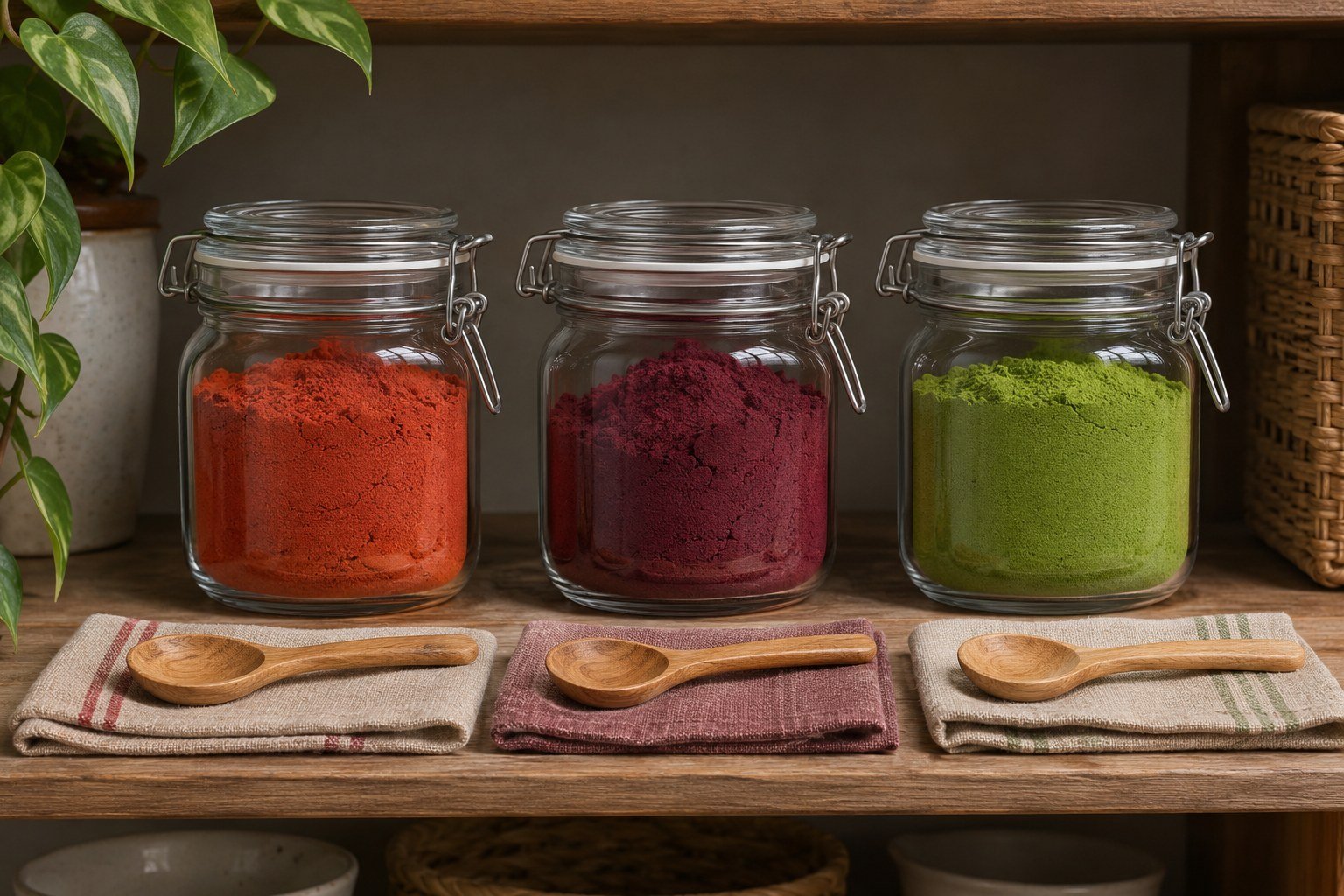
If you transfer an ingredient into another container, keep the product name, batch details, best-before information and instructions with it. An attractive jar is less useful when nobody can identify its contents or remember when it was opened.
A small opening-date note helps you rotate ingredients sensibly. It does not replace the manufacturer's date or create a new guarantee about how long the contents will remain suitable.
Reduce unnecessary exposure
The National Center for Home Food Preservation notes that dried foods can take up moisture again and that packaging and storage conditions matter. Close the container after taking out what the recipe needs. Do not hold an open pouch over steam from a cooking pan.
Check the closure itself. Powder or pieces caught in a seal can prevent a pouch from closing neatly. If you use a separate container, select one suitable for food and the manufacturer's storage instructions.
Plan pack size around actual use
A large pack may be attractive on price, but a household that uses an ingredient occasionally needs a different plan from a kitchen making the same dish every day. Compare the amount you expect to use with the space and containers you actually have.
Keep newer packs behind older ones when the dates and conditions support that rotation. Make it easy to find the ingredient, rather than opening a second pack because the first one is hidden at the back.
Know when to stop using a pack
Visible mould, signs of pests, damaged packaging or an abnormal smell are reasons to investigate rather than season away the problem. Do not use appearance alone as proof that an ingredient is safe. If a purchased pack seems defective, retain the label and order details and contact the seller.
Common questions
Does an airtight jar reset the shelf-life clock?
No. Transferring the contents does not extend the printed date or reverse previous exposure.
Should all dried foods go in the refrigerator?
Follow the specific label. A general storage article cannot replace product-specific instructions.
Explore the MyMarwar pantry
Check MyMarwar pantry collection for current product information and available options. Read the actual label before preparation, and ask the MyMarwar team if an essential detail is missing.
Further reading
Related MyMarwar guides
- Dried Vegetables: A Practical Guide to Choosing and Cooking Them
- How to Rehydrate Dried Vegetables Without Guessing the Texture
- Vegetable Powder Storage: Onion, Garlic and Tomato
- Beetroot Powder Storage: A Clear Routine After Opening
- Moringa Powder Storage: Protect the Ingredient and Keep Its Identity Clear