
How Bhinmal Mojadi Is Made: Understanding Upper, Sole and Handwork
Bhinmal mojadi making is easier to appreciate when you look at the shoe as several connected parts. Decoration gives a pair its visible character, while the upper, lining, shape and sole determine how that design becomes wearable footwear. Understanding those parts also helps you ask more useful buying questions.
This is a buyer’s guide to construction, not a report from a particular Bhinmal workshop. Makers can use different materials and methods. For wider craft context, D’source’s documented Jaipur mojari process describes preparing upper and sole components, joining them and finishing the edges. Confirm the method used for your selected MyMarwar design separately.
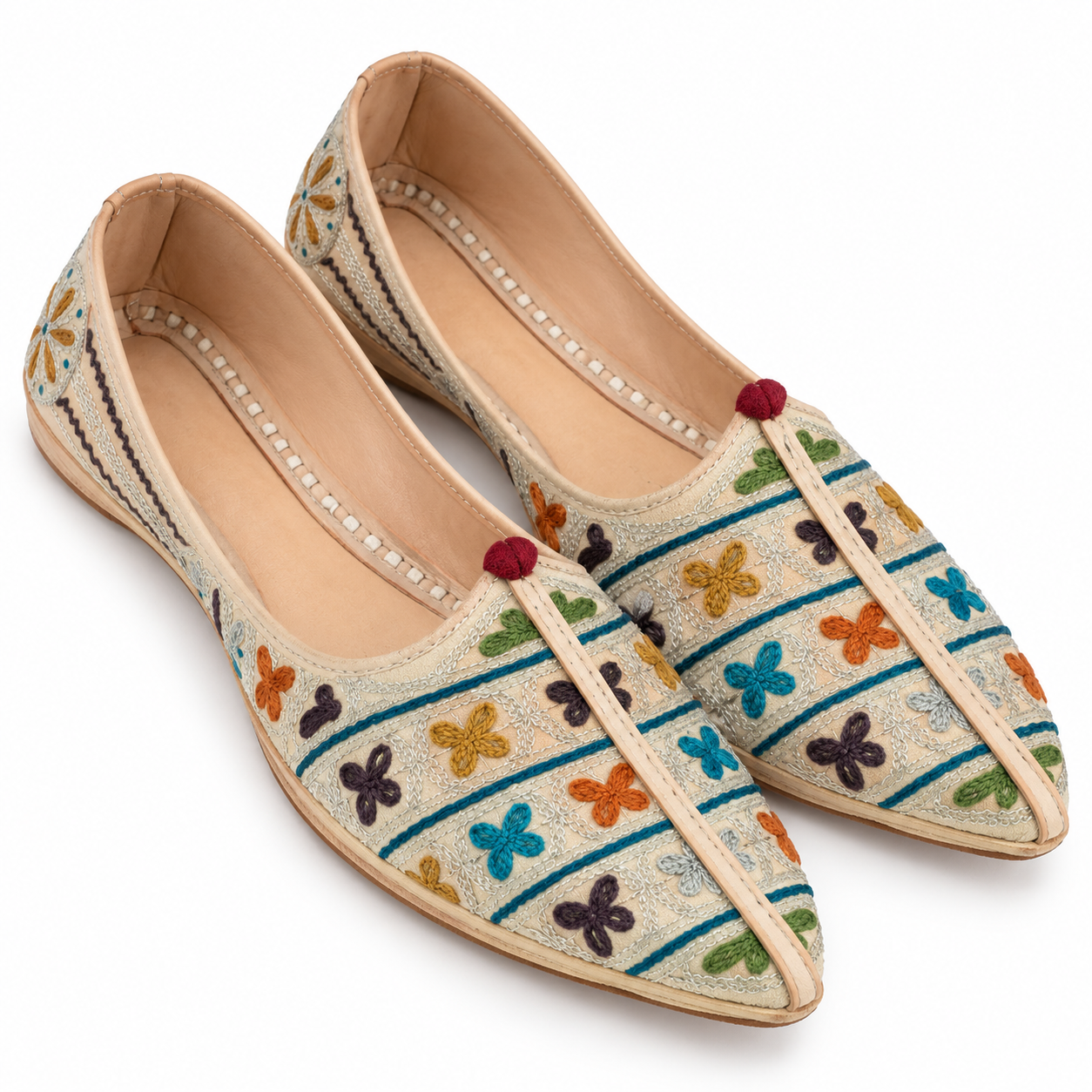
Start with the upper and its supporting layers
The upper is the portion over and around the foot. Inspect its surface, the shape of the opening and the edge treatment. If you see embroidery on fabric, ask what supports that fabric and what touches the foot inside. A phrase such as handmade leather mojari is more useful when each layer is explained.
For a buyer, a close view of the inside and a side profile are as helpful as the main product photograph. Look for areas that may sit against your toes or the top of your foot. Visible decorative detail does not establish that the interior will suit your foot shape.
Understand what handmade refers to
A pair can involve hand assembly, hand stitching, machine embroidery or a combination of processes. Ask which operations are done by hand rather than assuming that the entire shoe was produced without tools or machines. D’source’s Jaipur documentation shows that contemporary materials and production methods can vary within the broader craft.
An accurate description might identify hand stitching on a particular join or hand embroidery on the upper. Clear, limited statements tell you more than an unexplained claim that every stage is traditional.
Read the sole and the join
- Ask what forms the outsole that contacts the ground.
- Ask whether there are additional layers above it and what they are made from.
- View the edge where the upper and sole meet.
- Compare the two shoes for the same intended outline and level of finishing.
The construction may use stitching, adhesive or both. A photograph cannot reliably reveal every hidden layer. Ask for the specification if it affects your purchase, and avoid equating a thick-looking sole with a guaranteed level of cushioning or service life.
Distinguish craft variation from a problem
Small differences in handwork may be part of the appearance you are choosing. A loose attachment, an exposed sharp point or an obvious separation at a join deserves a seller’s explanation. Check the pair together under ordinary light instead of judging one close-up in isolation.
During an indoor trial, assess both shoes with the socks or foot covers you expect to wear. Do not continue a trial that causes pain in the hope that the word handmade guarantees the fit will change.
Keep a useful construction record
Save the listing and the seller’s answers about materials and handwork. If you later want another pair, those details are a better reference than remembering only its colour. Share the order number and clear photographs when raising a quality question.
Common questions
Does every Bhinmal mojadi have a leather sole?
Do not assume that. Check the selected pair’s sole material independently of its regional name.
Does hand stitching prove the embroidery is also handmade?
No. Those are separate processes and should be described separately.
Explore MyMarwar mojari
Browse MyMarwar men’s mojari and jutti for current designs and selected-product details. For a design, size or origin enquiry, contact MyMarwar. Review the current shipping and returns information before ordering.
Related MyMarwar guides
- Why Choose Bhinmal Mojadi? Local Craft, Style and Buying Considerations
- Leather Mojari Quality Guide: Upper, Lining, Sole and Handmade Details Explained
- Handcrafted Mojadi for Men: Understanding the Appeal of Handmade Footwear
- Handmade Mojari Details: What to Look for in Product Photographs
Construction background: D’source — Mojari Making, Jaipur, Rajasthan, by Prof. Bibhudutta Baral, Divyadarshan C. S. and Lija M. G., NID Campus, Bengaluru. This documents Jaipur practice and is not evidence of the method used by a particular Bhinmal maker.
New to the local names? Read Bhinmal ki mojadi, mojari and jutti terminology before comparing listings.