
Pearl Jutti: Bead Materials, Attachment and Outfit Balance
A pearl jutti can mean footwear decorated with pearl-like beads, genuine pearls or a mixture of embellishments. The description alone does not identify the bead material. Start with a clear specification, then inspect how the decoration is attached and whether it suits your clothes and the way you will use the shoes.
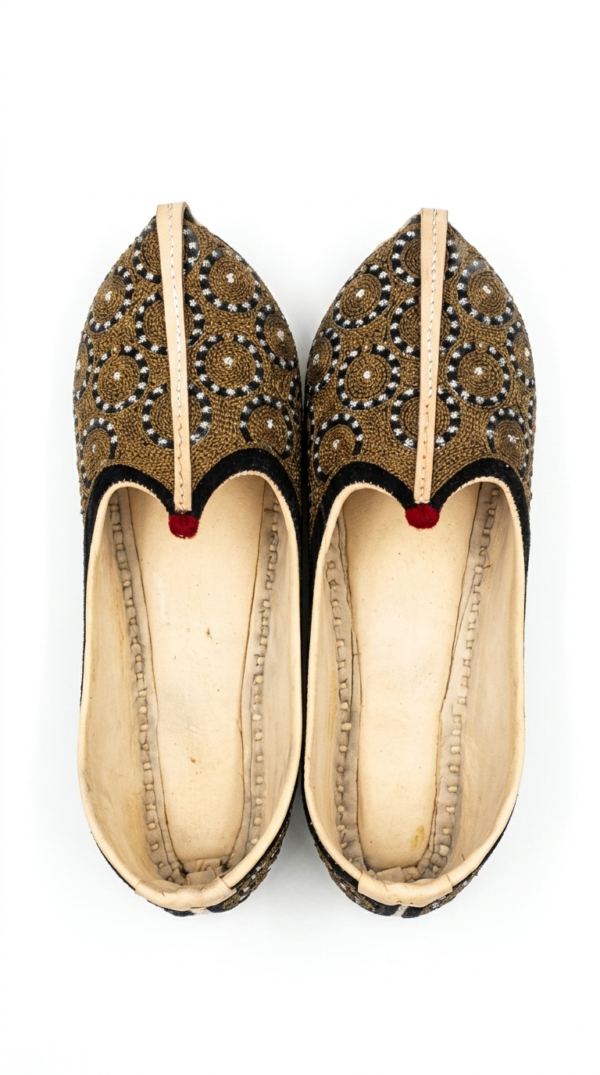
Understand what “pearl” describes
Ask whether the seller means a pearl colour, a pearl-effect bead or a specified pearl material. These descriptions are different. A photograph may show shine and shape but cannot prove composition. If the material affects your decision or price, ask for the answer in writing before ordering.
Look for a close-up that includes the surrounding thread and upper. A densely decorated toe can look smooth from a distance while having raised attachments. Compare the two shoes and the edges of the pattern rather than expecting a single studio photograph to answer every question.
Check attachment and clothing contact
Beads may be attached in different ways. Ask the maker how this pair is constructed and what to do if a bead loosens. Do not pull at a new shoe to test strength. During an unworn indoor trial, notice whether trouser fabric catches against the decoration when standing or taking a normal step.
A long sherwani or a flowing hem can brush the toe repeatedly. Try the complete outfit. If there is contact, changing the hem or choosing a flatter decorative surface may be more practical than hoping the fabric will settle. Decoration should not dictate an awkward walking pattern.
Three ways to keep the outfit balanced
With a plain cream kurta, a restrained bead arrangement can provide the focal detail. With richly embroidered clothing, compare a quieter pair that repeats one colour. With a dark evening outfit, judge the bead contrast in ordinary room lighting as well as under a camera flash.
Avoid matching only from close-up photographs. Stand back and look at the whole outfit, including buttons, stole and any jewellery. Several shiny accents can compete. Choose the accent you want people to notice first and keep the remaining details simpler.
Plan care before the first event
Ask for care instructions covering the upper, bead surface and attachment. Do not assume a product for leather can be spread over every decorative component. Avoid soaking and aggressive scrubbing unless the maker specifically instructs otherwise. If an attachment is loose, stop wearing the pair until it is assessed.
Store each shoe so hard decoration is not pressed against the other upper. Keep the footwear dry before putting it away. For travel, separate the pair with a clean protective layer and avoid placing heavy belongings over the decorated toe.
Frequently asked questions
Are pearl-effect beads the same as genuine pearls?
No. Ask for the exact material description. Appearance and a product name do not establish that distinction.
Does beadwork mean the jutti will be uncomfortable?
Not necessarily. The lining and fit determine what contacts your foot, while the decoration affects the outer surface. Assess both independently.
Is the pictured MyMarwar pair a pearl product?
It is shown as a beadwork reference. Do not infer pearl composition from the image; check the product information or ask MyMarwar.
Explore MyMarwar
Browse men’s mojari and embroidered jutti, check size guidance and read the current shipping and returns policy. Confirm the material, available size and exact design on the individual product page. For photographs or model-specific questions, contact MyMarwar.