
Leather Mojari Quality Guide: Upper, Lining, Sole and Handmade Details Explained
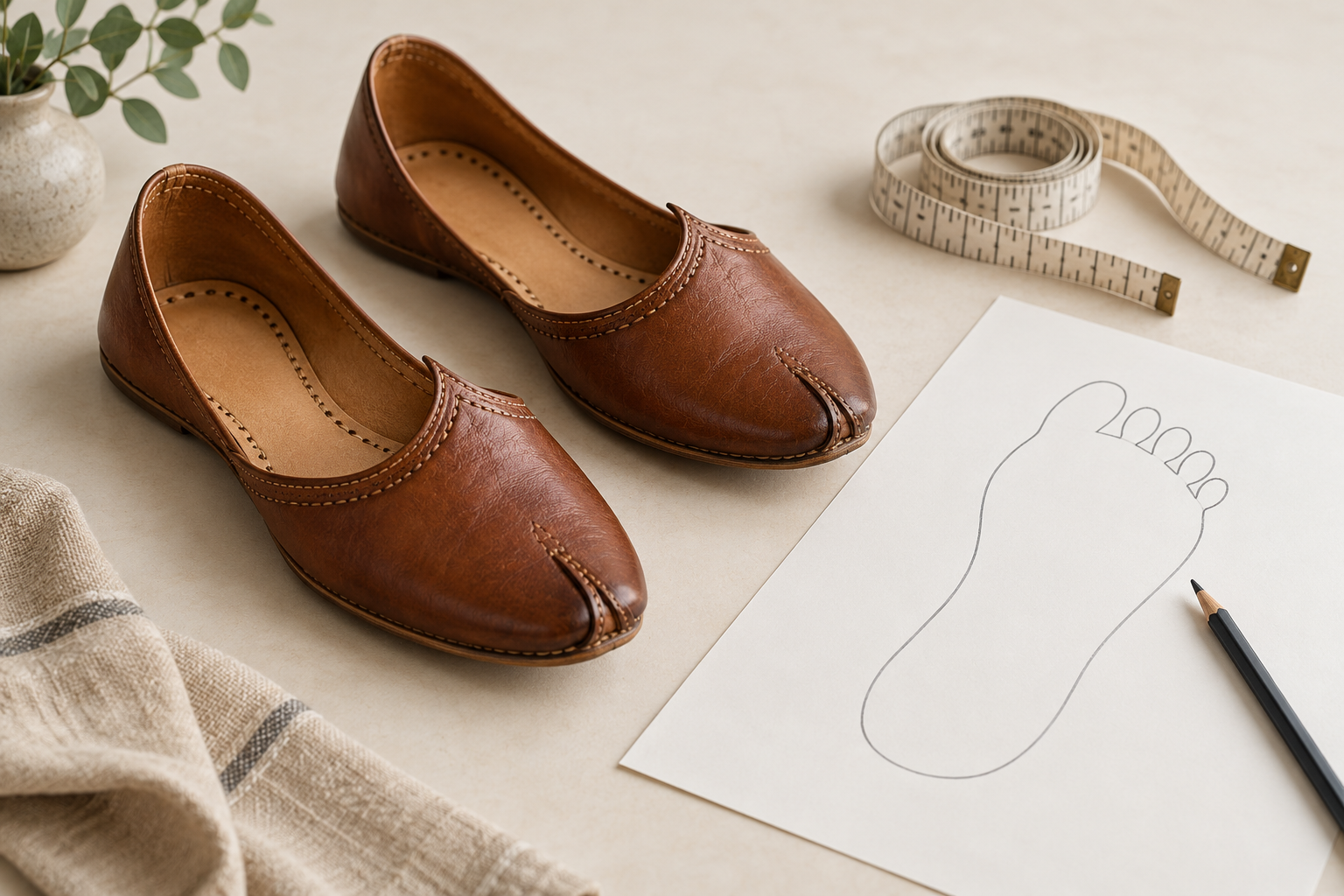
How do you choose a good leather mojari online when you cannot hold it in your hands? The strongest starting point is clear information about the specific shoe. A beautiful photograph, the word handmade or a regional name can introduce the design, but none of these describes every component. Use this guide to read product details, ask better questions and inspect a new pair without relying on risky home tests.
Read leather as a component description
A footwear title may use leather to describe the upper, while the lining, footbed or sole uses another material. Ask which parts the description covers. Phrases such as genuine leather, pure leather and handmade are useful only when the seller explains them for the actual design. Do not assume a colour establishes the leather grade or that a leather upper means a leather sole. MyMarwar can clarify a selected listing; provide the exact product name so the answer applies to the pair you are considering.
The upper: appearance and fit
The upper is the visible structure around the foot. Inspect the photographs for its height, toe outline, seams and decoration. A high opening or narrow-looking front may feel different from a lower-cut design, even when both share a size number. Photographs help you form questions, but they cannot confirm how the shoe feels on your foot. Ask about the design's fit and share foot length and width. Consider how the upper meets your intended trouser hem, especially if you plan to wear a churidar or a tapered pajama.
The lining and footbed
Ask what sits against your foot and whether a visible seam is near a point where your usual footwear rubs. A smooth photograph is not proof of cushioning or a particular level of support. If a listing does not state an orthopaedic feature, do not infer one. Look for an interior photograph and ask whether a care routine is needed for the lining. Try the pair with the socks you plan to use, since thickness changes the available space. Personal fit matters more than a generic promise that every handmade shoe is comfortable.
The sole and its intended use
A sole photograph can show visible material and construction, but it cannot demonstrate grip on every surface. Ask about intended use, particularly if your event includes wet outdoor areas, polished floors or prolonged standing. Do not assume that a stitched edge proves a particular internal construction method. Check the seller's written information before treating an unfamiliar pair as footwear for extensive walking. A traditional design can be an excellent styling choice while still requiring a practical backup for travel or unexpected weather.
Handmade variation and defects
Small differences in stitching or pattern can occur in handmade work. Inspect both shoes together and distinguish an individual craft detail from damage or a major mismatch. If something seems uncertain, photograph it and contact the seller while the shoes remain clean and unworn outdoors. The word handmade does not remove the need for a clear description, an accurate size or a usable pair. Avoid cutting a thread or trying a repair before discussing the issue, as this may complicate assessment and any available exchange process.
Avoid unreliable identification tests
Do not burn, scratch, soak or bend a new shoe aggressively to test its material. These actions can damage the finish and make a return more difficult. Smell alone is not a complete material specification either. Ask for written component information and close photographs, then check whether the seller's answers are consistent with the listing. If a particular leather type matters to you, request explicit confirmation before ordering. When the answer is unclear, pause the purchase rather than inventing certainty from a home experiment.
Inspect the delivered pair methodically
Compare the colour, size and design with the order. Look at the upper, interior and sole edges in ordinary light, then try both shoes on a clean indoor surface. Walk a few steps, turn and sit down. Notice pressure, excessive heel slipping or a seam that rubs. Keep the packaging and order information while deciding. Contact support promptly about a wrong variation or possible damage. A careful inspection gives the seller clearer information than a vague statement that the quality seems different from what you expected.
Care protects a suitable purchase
Once you have accepted the fit, follow care instructions for the actual materials. Remove dust gently, allow worn shoes to air and store them dry. Do not spread polish over embroidery or use an unfamiliar household oil as a general treatment. A good purchase combines accurate product information, appropriate fit and a manageable care routine. Browse MyMarwar's leather and embroidered designs, and ask about the pair you like before ordering. The collection's Bhinmal–Jalore connection is meaningful background, while the listing details guide the individual purchase.
Explore MyMarwar
Browse MyMarwar handmade Rajasthani mojadi and mojari from Bhinmal and Jalore. Check the selected product for materials, sizes, price and stock. For order questions, contact MyMarwar and review shipping and returns.